

Part of our Washington guide.
Three places and guides from our Olympic National Park coverage, gathered into one page: a secret moss-draped forest, the Velvet Forest nurse log gardens, and the twisted cedar snags.
Related travel guides: Glowing Fungi Forests Of Olympic National Park and Mysteries Of Lake Crescent's Devil's Punch Bowl.
Secret Moss-Draped Forest In Olympic National Park
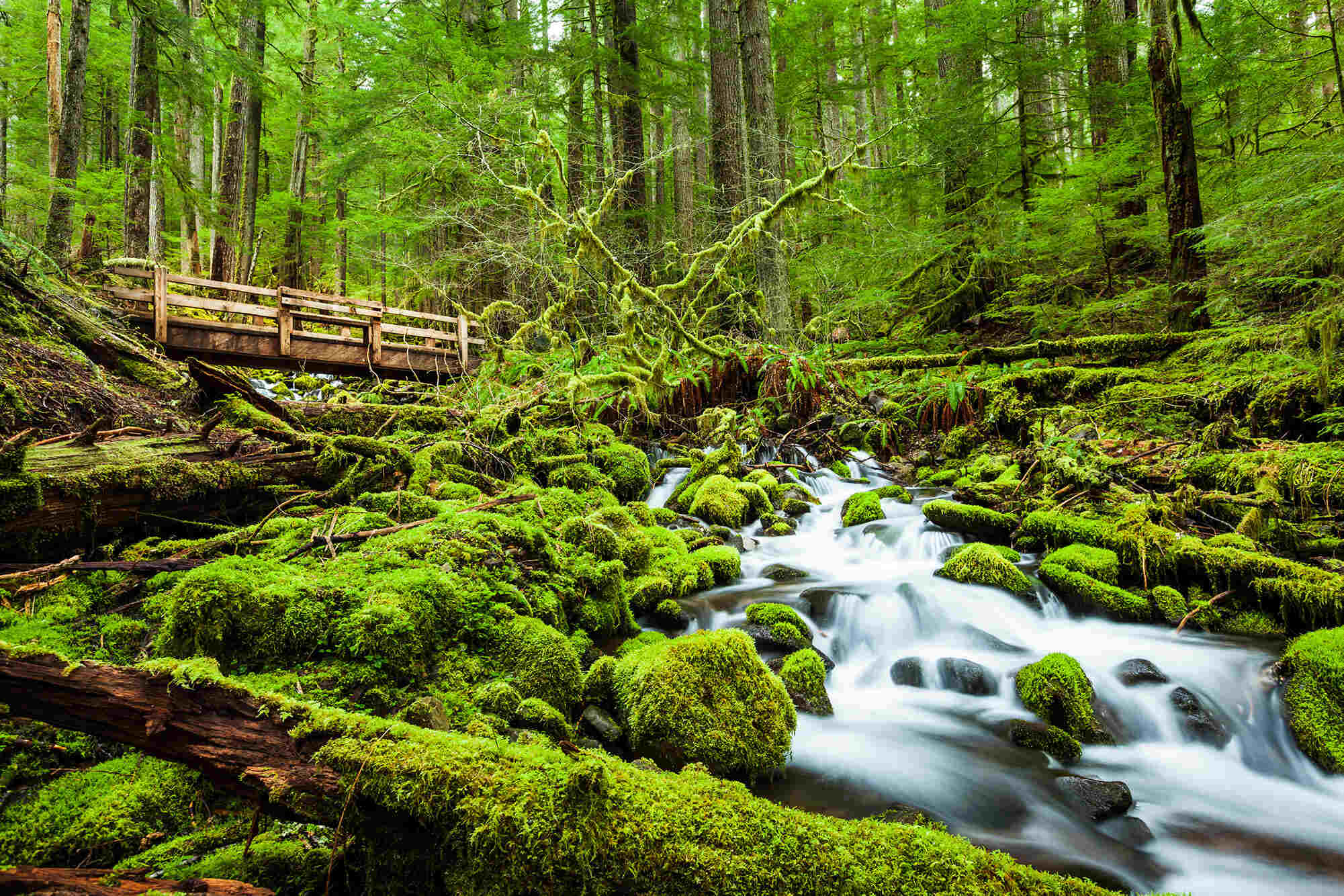
Imagine stepping into a world where trees wear thick coats of green moss, and sunlight filters through a canopy of leaves, creating a magical glow. This enchanting place exists in the Hoh Rainforest within Olympic National Park in Washington. Known for its lush greenery and diverse wildlife, this forest offers a unique experience for nature lovers. Walking along its trails, you'll hear the gentle rustle of leaves and the distant call of birds. The air feels fresh and cool, filled with the scent of earth and rain. The Hoh Rainforest receives an average of 12 to 14 feet of rain annually, which sustains the thick moss draping the bigleaf maples and Sitka spruces. The main trail, the Hall of Mosses, is a 0.8-mile loop that takes about 30 minutes to walk. A second trail, the Spruce Nature Trail, is 1.2 miles and takes roughly 45 minutes. Both trails start from the Hoh Rainforest Visitor Center, which is open year-round but may close for weather. The drive from the park's entrance at Port Angeles to the Hoh Rainforest is about 90 miles and takes roughly two hours. The park entrance fee is $30 per vehicle, valid for seven days, or you can use an America the Beautiful Pass. The Hoh Rainforest is also one of the best places to spot Roosevelt elk, which number around 5,000 in the park. For those seeking more secluded spots, the South Fork Hoh River Trail offers a longer, less-crowded hike into the same moss-draped ecosystem. The moss itself is often sphagnum or clubmoss, which can hold up to 20 times its weight in water, keeping the forest floor damp even in drier months. This area is part of the larger temperate rainforest that stretches along the Olympic Peninsula, and it is one of the few places in the world where you can see such dense epiphytic growth. The Hoh Rainforest is also a designated UNESCO World Heritage site, part of the Olympic National Park's 922,651 acres. The best time to visit is from late spring to early fall, when the weather is driest, though the forest is beautiful in the rain as well. The Hoh Rainforest is also home to the Hoh River, which originates from the Blue Glacier on Mount Olympus, the tallest peak in the park at 7,980 feet. The river is a popular spot for fishing, with salmon and steelhead runs in the fall. The Hoh Rainforest is also a great place for photography, with the low light and mist creating ethereal images. The forest is also a haven for birdwatchers, with species like the northern spotted owl, marbled murrelet, and varied thrush. The Hoh Rainforest is also a place of deep cultural significance to the Hoh Tribe, who have lived in the area for thousands of years. The tribe's reservation is located along the Pacific coast, near the mouth of the Hoh River. The Hoh Rainforest is also a place of scientific study, with researchers from the University of Washington and other institutions studying the forest's unique ecology. The forest is also a place of inspiration for artists, writers, and photographers, who come to capture its beauty. The Hoh Rainforest is also a place of solitude, where you can escape the crowds and find peace in nature. The forest is also a place of wonder, where you can see the power of nature in the growth of the trees and the moss. The Hoh Rainforest is also a place of mystery, where you can feel the presence of the past in the ancient trees. The forest is also a place of hope, where you can see the resilience of nature in the face of change. The Hoh Rainforest is also a place of beauty, where you can see the beauty of the natural world in its purest form. The forest is also a place of life, where you can see the cycle of life in the growth and decay of the trees. The Hoh Rainforest is also a place of death, where you can see the end of life in the fallen trees and the snags. The forest is also a place of renewal, where you can see the beginning of life in the new growth on the nurse logs. The Hoh Rainforest is also a place of magic, where you can feel the magic of the forest in the air. The forest is also a place of dreams, where you can dream of the past and the future. The Hoh Rainforest is also a place of reality, where you can see the reality of the natural world. The forest is also a place of truth, where you can see the truth of the natural world. The forest is also a place of peace, where you can find peace in the natural world. The Hoh Rainforest is also a place of joy, where you can find joy in the natural world. The Hoh Rainforest is also a place of awe, where you can feel awe in the natural world. The Hoh Rainforest is also a place of secrets, and it is one of the many secrets hidden in Washington that travelers often overlook.
Velvet Forest Nurse Log Gardens In Olympic National Park
Have you ever wondered what makes Velvet Forest Nurse Log Gardens in Olympic National Park so special? These unique gardens grow on fallen trees, known as nurse logs, which provide a rich environment for new plants to thrive. As the old tree decays, it offers nutrients, moisture, and a stable place for seedlings to take root. This creates a lush, green carpet of mosses, ferns, and young trees that seem to float above the forest floor. Visiting these gardens feels like stepping into a magical world where life continuously renews itself. The nurse logs are typically western hemlock or Sitka spruce, which can take 100 to 200 years to fully decay. During that time, a single nurse log can support dozens of species, including deer fern, sword fern, and red huckleberry. The Velvet Forest is located near the Quinault Rainforest, another temperate rainforest in the park, which receives similar rainfall to the Hoh. The Quinault area has a 0.5-mile loop trail called the Quinault Rain Forest Nature Trail, which passes several nurse log gardens. The trail is wheelchair accessible and takes about 20 minutes to walk. The Quinault Rainforest also has a 4-mile trail to the Merriman Falls, a 30-foot waterfall. The nurse log gardens are most visible in the spring and summer, when the ferns and mosses are at their greenest. The gardens are also a good place to see banana slugs, which can grow up to 10 inches long. The Velvet Forest is also a place where you can see the process of forest succession, as the nurse logs eventually become part of the forest floor. The gardens are also a reminder of the interconnectedness of life, as the dead tree supports new life. The gardens are also a place of peace, where you can sit and watch the forest grow. The gardens are also a place of learning, where you can learn about the ecology of the forest. The Velvet Forest is also a place of inspiration, where you can be inspired by the resilience of life. The gardens are also a place of hope, where you can see hope in the new growth. The gardens are also a place of secrets, and they are part of the secrets mysteries in Washington that reveal the hidden life of the forest.
Twisted Cedar Snags In Olympic National Park
Have you ever wondered about the twisted cedar snags in Olympic National Park? These unique trees, with their gnarled and spiraled trunks, tell a fascinating story of nature's resilience. Found throughout the park, these ancient cedars have withstood harsh weather, fires, and time itself. Their twisted forms are not just visually striking but also serve as a reminder of the forest's dynamic history. Ready to learn more about these natural wonders? Let's dive into the secrets behind these twisted giants. The twisted cedar snags are primarily Alaska yellow-cedar, which can live for over 1,000 years. The twisting is often caused by a combination of wind, snow, and the tree's own growth patterns, creating a spiral grain that strengthens the wood. These snags are most commonly found in the higher elevations of the park, such as the Hurricane Ridge area, which is at 5,242 feet. Hurricane Ridge is accessible by car from Port Angeles, a 17-mile drive that takes about 30 minutes. The road is open from late spring to early fall, depending on snow. The Hurricane Ridge Visitor Center has exhibits on the park's ecology and history. The twisted snags are also visible along the Hurricane Hill Trail, a 3.2-mile round trip that gains 700 feet in elevation. The trail offers views of the Olympic Mountains and the Strait of Juan de Fuca. The snags are also found in the Sol Duc Valley, which is known for its hot springs and waterfalls. The Sol Duc Hot Springs are open year-round, with a fee of $15 per person for a day pass. The twisted snags are also a habitat for wildlife, including birds like the pileated woodpecker and the northern flicker. The snags provide nesting sites and food sources for these birds. The twisted snags are also a reminder of the park's fire history, as many of them are remnants of past wildfires. The park has a natural fire regime, with fires occurring every 100 to 300 years. The snags are also a place of wonder, where you can wonder about the history of the forest. The snags are also a place of respect, where you can respect the resilience of nature. The twisted snags are also a place of secrets, and they are one of the ghost secrets hidden in Washington that tell the story of the forest's past. For those interested in hiking and the outdoors in Washington, the trails to these snags offer a chance to see some of the park's most unique features.
