

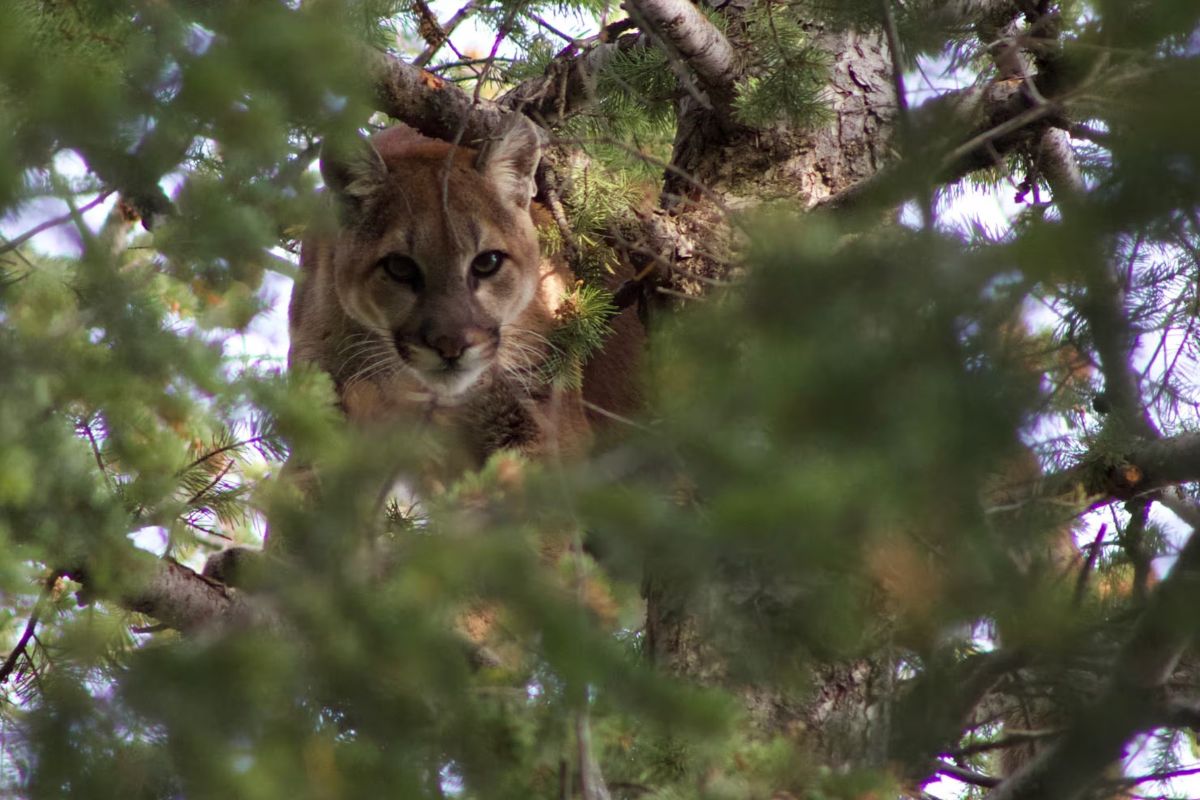
Mountain lions in South Dakota's Black Hills maintain territories that range from roughly 50 square miles for females to over 150 square miles for males, with home sizes depending on prey density and terrain. These solitary cats mark their ranges with scratches, urine, and feces to ward off other lions, and a male's territory often overlaps with several females to ensure mating opportunities and a steady food supply.
Custer State Park
Custer State Park offers a mix of rugged terrain and dense forests.
- Sylvan Lake: Early mornings or late evenings are the best times to catch a glimpse.
- Needles Highway: This scenic drive passes through prime mountain lion territory. Keep an eye out for tracks or other signs of their presence.
- French Creek Natural Area: A less-traveled part of the park, this area provides a quieter environment where mountain lions feel more secure.
Wind Cave National Park
Wind Cave National Park's mix of prairie and forested areas creates an ideal habitat.
- Rankin Ridge: This high point offers panoramic views and a chance to spot mountain lions from a distance. Bring binoculars.
- Elk Mountain Campground: Staying overnight increases your chances of hearing or seeing mountain lions. Listen for their distinctive calls at night.
- Cold Brook Canyon: This secluded canyon is a favorite spot for mountain lions. Hike quietly and stay alert for any signs of movement.
Black Elk Wilderness
The Black Elk Wilderness, part of the Black Hills National Forest, is a protected area where mountain lions thrive. Its remote location makes it a sanctuary for these big cats. For those interested in hiking and the outdoors in South Dakota, this wilderness offers some of the most challenging and rewarding trails in the region.
- Harney Peak: The highest point in South Dakota, Harney Peak, offers a chance to spot mountain lions. The challenging hike is worth the effort.
- Lost Cabin Trail: This trail winds through dense forests and rocky outcrops, prime mountain lion territory. Hike with caution and respect their space.
- Grizzly Bear Creek: Despite its name, this area is more likely to be home to mountain lions than bears. The creek provides a water source, attracting various wildlife.
Badlands National Park
The rugged terrain and deep canyons of Badlands National Park provide excellent cover.
- Sage Creek Wilderness Area: This remote area is less visited. Look for tracks near water sources.
- Castle Trail: The longest trail in the park traverses diverse landscapes where mountain lions might roam. Stay vigilant.
- Conata Basin: This area is known for its wildlife, including mountain lions. Early morning hikes increase your chances of a sighting.
Spearfish Canyon
Spearfish Canyon, with its lush vegetation and steep cliffs, is another location for mountain lion sightings. The area is also home to several mysterious forest formations in South Dakota, adding an extra layer of intrigue to any visit.
- Roughlock Falls: Visit during dawn or dusk for the best chance of seeing one.
- Spearfish Falls: The falls and surrounding area provide a serene environment where mountain lions feel at home. Keep your camera ready.
- Iron Creek Lake: This tranquil lake is a great place to watch for wildlife, including mountain lions. The surrounding forest offers plenty of cover for these elusive cats.
Understanding Mountain Lion Territories
Mountain lions in South Dakota's Black Hills have fascinating territories. These big cats prefer rugged terrain, dense forests, and areas with abundant prey. They are solitary animals, marking their territories with scratches, urine, and feces to ward off others. Males have larger territories than females, often overlapping with several females' ranges. This helps ensure a steady food supply and mating opportunities.
Human activities, like urban development and recreational trails, can disrupt these territories. Conservation efforts focus on preserving natural habitats and minimizing human-wildlife conflicts. By understanding their territorial behavior, we can better protect these creatures and their environment. Those seeking secret natural landmarks in South Dakota will find that the Black Hills' mountain lion territories themselves are among the most hidden and rewarding features of the landscape.
Next time you visit the Black Hills, remember you're in mountain lion country. Respect their space, stay safe, and appreciate the wild beauty of these animals. Their survival depends on our awareness and actions.
