

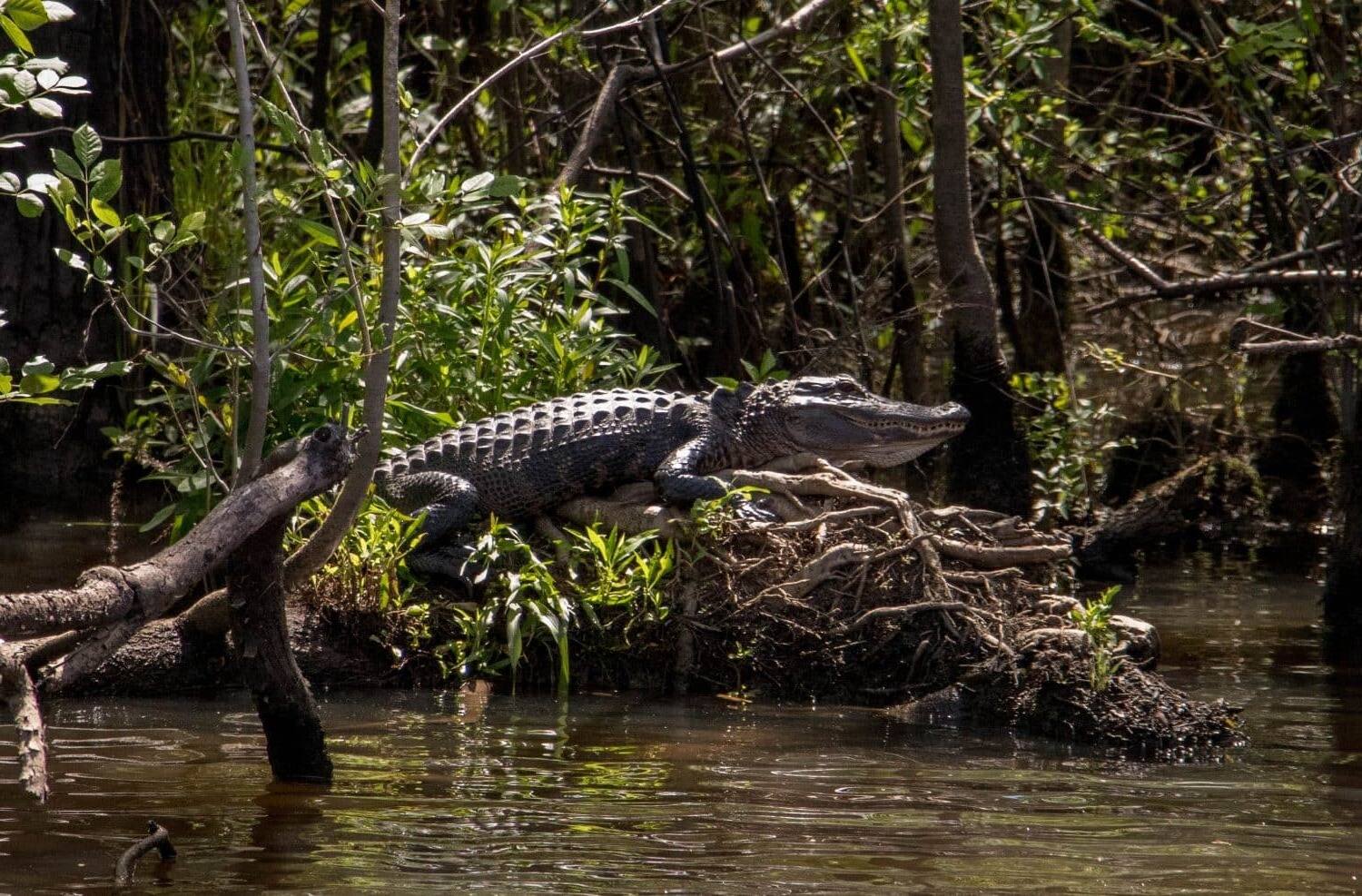
Alligators in South Carolina’s Huntington Beach State Park are most often seen feeding, sunning, or cruising in the freshwater lagoon and salt marshes near Murrells Inlet. The park’s alligator programs are scheduled for 10:00–11:00 a.m., confirming that early morning is prime viewing time, while late afternoon offers another window of activity before the heat of midday slows them down.
Secrets of Alligator Territories in South Carolina's Huntington Beach
Huntington Beach State Park is a haven for wildlife. Its alligator territories can be found in various spots throughout the park.
1. Mullet Pond
Mullet Pond is a prime location. Visitors often see them basking in the sun or gliding through the water.
- Why it's great: The pond's calm waters make it easy to spot alligators.
- Best time to visit: Early morning or late afternoon.
2. Causeway
The Causeway runs through the park, offering views of marshes on both sides. Alligators often lounge near the water's edge.
- Why it's great: Easy access and multiple viewing points.
- Best time to visit: Early morning or late afternoon when alligators are more likely to be active.
3. Sandpiper Pond Nature Trail
The Sandpiper Pond Nature Trail winds through diverse habitats, including areas where alligators thrive. This trail offers a more immersive experience.
- Why it's great: Combines hiking with wildlife observation. For more on the region's trails, see hiking and the outdoors in South Carolina.
- Best time to visit: Morning or late afternoon for cooler temperatures.
4. Atalaya Castle
Atalaya Castle, a historic landmark within the park, is surrounded by wetlands. These wetlands are home to several alligators. The castle's unique architecture adds an extra layer of intrigue.
- Why it's great: Combines history with wildlife viewing.
- Best time to visit: Late afternoon for a chance to see alligators and enjoy the sunset.
5. Marsh Boardwalk
The Marsh Boardwalk extends over the park's marshlands, providing a close-up view of alligator habitats. This boardwalk is a favorite among photographers and nature lovers.
- Why it's great: Offers a safe, elevated view of alligators.
- Best time to visit: Early morning for the best light and fewer crowds.
6. Oyster Landing
Oyster Landing is a lesser-known spot. This quiet area is perfect for those looking to escape the more crowded parts of the park.
- Why it's great: Secluded and peaceful.
- Best time to visit: Mid-morning when alligators are more likely to be active.
7. Nature Center
The Nature Center at Huntington Beach State Park provides educational exhibits about the park's wildlife, including alligators. The surrounding area also offers a chance to see these creatures in their natural habitat.
- Why it's great: Educational and informative.
- Best time to visit: Anytime, but check for scheduled talks or tours.
8. Jetty View Walk
Jetty View Walk offers views of the ocean and marshlands. Alligators can often be seen in the marshy areas near the walk.
- Why it's great: Scenic views and wildlife sightings.
- Best time to visit: Late afternoon for a relaxing end to your day.
9. Brookgreen Gardens
Adjacent to Huntington Beach State Park, Brookgreen Gardens features extensive gardens and wildlife exhibits. The Lowcountry Zoo within the gardens is home to several alligators, providing a controlled environment to learn about these creatures.
- Why it's great: Combines art, nature, and wildlife.
- Best time to visit: Morning to avoid the heat and crowds.
10. Waccamaw River
The Waccamaw River borders the park. Kayaking or taking a boat tour offers a unique perspective on these reptiles in their natural environment.
- Why it's great: Offers a different vantage point from the water.
- Best time to visit: Early morning or late afternoon for the best light and activity.
Discovering Alligator Habitats
Exploring Huntington Beach State Park reveals a lot about alligator territories. These creatures thrive in the park's wetlands, marshes, and lagoons. Observing them in their natural habitat offers a glimpse into their behavior and lifestyle. Remember to maintain a safe distance and respect their space. The park provides an opportunity for wildlife enthusiasts to learn about alligators while enjoying the beauty of South Carolina's natural landscapes. Whether you're a seasoned traveler or a curious beginner, this park has something for everyone. So, pack your binoculars, grab your camera, and get ready for an unforgettable adventure. The secrets of alligator territories await your discovery.
Related travel guides: Bioluminescent Beach Walks In South Carolina's Kiawah and Myrtle Beach's Mind-Bending Upside-Down Adventure.
