

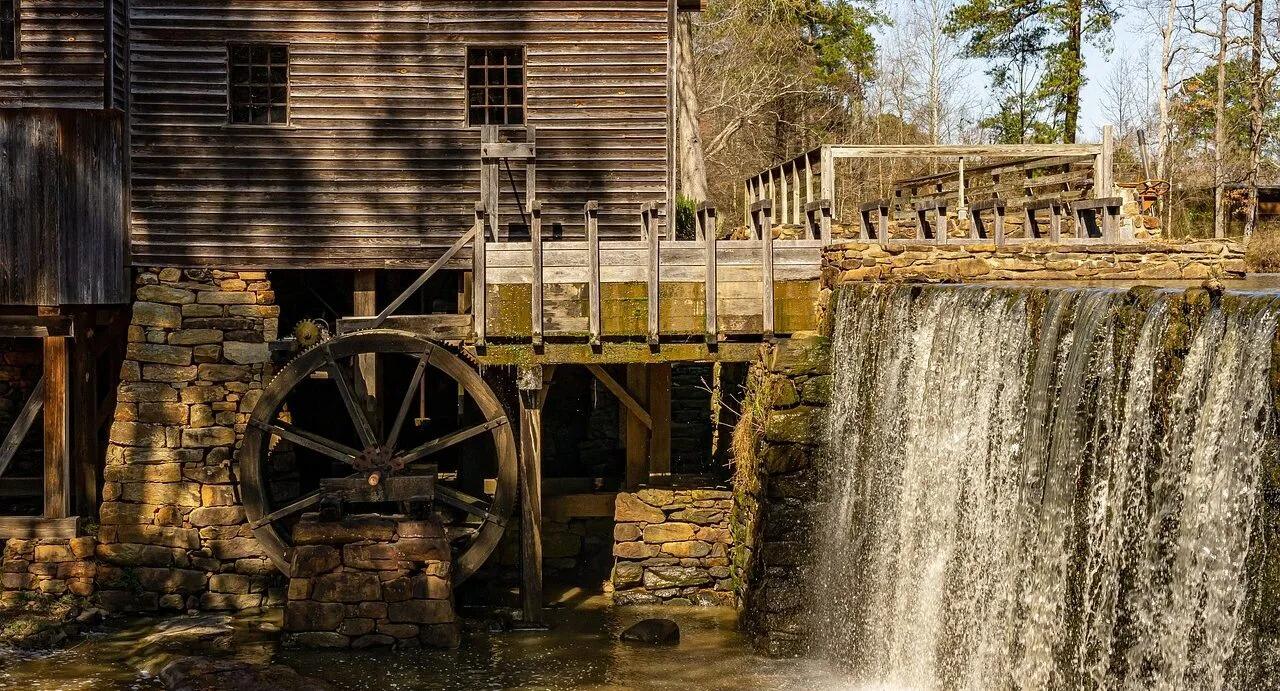
North Carolina’s Piedmont region holds more than a dozen historic gristmills, and most visitors never see them. Yates Mill, fully restored and operating near Raleigh, dates back to 1756—over 265 years of continuous history at a single site. These working landmarks ground corn and wheat for local farmers long before supermarkets existed, and several still produce stone-ground meal today.
Discovering North Carolina's Hidden Gristmills
The Piedmont's gristmills cluster along creeks and rivers that once powered massive waterwheels. Unlike the mountain mills many tourists know, these Piedmont treasures sit closer to the state's urban core, often hidden in plain sight within county parks or working farms. Each one tells a different chapter of agricultural life, from the 18th-century colonial era through the early 1900s.
1. Yates Mill
Yates Mill, near Raleigh, is a fully restored, operational gristmill dating back to 1756. Nestled in a 174-acre park, it provides educational tours and scenic trails. The mill's waterwheel still turns, and visitors can watch demonstrations of corn grinding during open hours.
2. Old Mill of Guilford
The Old Mill of Guilford, established in 1767, still grinds grain using water power. Located in Oak Ridge, it produces a variety of flours and mixes, and visitors can purchase these products on-site. The mill's massive overshot wheel and original milling machinery remain in working order, and the property includes a scenic mill pond and walking paths.
3. Murray's Mill
Murray's Mill, in Catawba County, dates back to 1913. This mill, along with its general store and wheat house, forms a historic site that offers tours and a glimpse into early 20th-century milling life. The complex also includes a covered bridge and a working blacksmith shop.
4. Linney's Mill
Linney's Mill, in Union Grove, has been family-owned and operated since 1937. It continues to produce stone-ground cornmeal and grits, maintaining its traditional methods and welcoming visitors to see the process. The mill's turbine system and original buhrstones are still in use, and the family offers samples of fresh-ground products.
5. Bost Grist Mill
Bost Grist Mill, near Concord, has been in operation since the early 1800s. It hosts events and reenactments, providing an interactive way to learn about milling and local history. The mill sits on a quiet creek and hosts an annual corn-shucking festival each fall.
6. War Eagle Mill
War Eagle Mill, though technically in Arkansas, has historical ties to North Carolina. This mill, rebuilt in 1973, operates as a working mill and a cultural center, celebrating the milling heritage shared by both states. Its founder, Sylvanus Blackburn, left North Carolina's Yadkin Valley in the 1830s to build the original structure along the War Eagle River.
Beyond the Mills: What to See Nearby
While the gristmills are the main draw, the Piedmont's North Carolina countryside offers plenty of hiking and the outdoors in North Carolina between mill visits. Several mills sit within larger parks with trails along the same creeks that once powered the wheels. For those interested in retirement and history in North Carolina, the region's small towns—many built around their original mill sites—offer a slower pace and preserved main streets.
If you're planning a longer stay, look for resorts to stay in Raleigh, North Carolina as a base for exploring the eastern Piedmont mills. The western mills near Catawba and Iredell counties sit within an hour's drive of Charlotte. For travelers seeking lake secrets in North Carolina, several mill ponds double as quiet fishing spots, and the larger reservoirs near the Yadkin River offer boating and swimming.
Don't overlook the secrets in North Carolina that lie just off the main highways—many mills are marked only by small brown signs, and some still operate on the honor system for buying cornmeal when the owner is away. The trading secrets in North Carolina tradition lives on at mill festivals, where neighbors swap produce, crafts, and stories just as they did a century ago. And while the Piedmont isn't known for beaches in North Carolina, the state's coastal beaches lie about three hours east if you want to combine mill history with a seaside finale. For a shorter coastal add-on, the beaches to visit in Greenville, North Carolina sit roughly two hours from the easternmost mills, making a weekend loop feasible.
Practical Tips for Visiting
Most mills open seasonally, typically from April through October, with limited winter hours. Check individual websites before heading out, as volunteer-run sites may close for private events. Wear sturdy shoes—several mills require a short walk from the parking area, and the ground around waterwheels stays slippery. Bring cash for on-site purchases; few mills accept cards. If you visit on a weekday, you may have the place almost to yourself, but weekends often feature live demonstrations and freshly ground product sales.
Plan a trip to the Piedmont and uncover these historical treasures. You'll gain a deeper appreciation for the area's heritage and the role gristmills played in shaping it. Happy exploring!
