

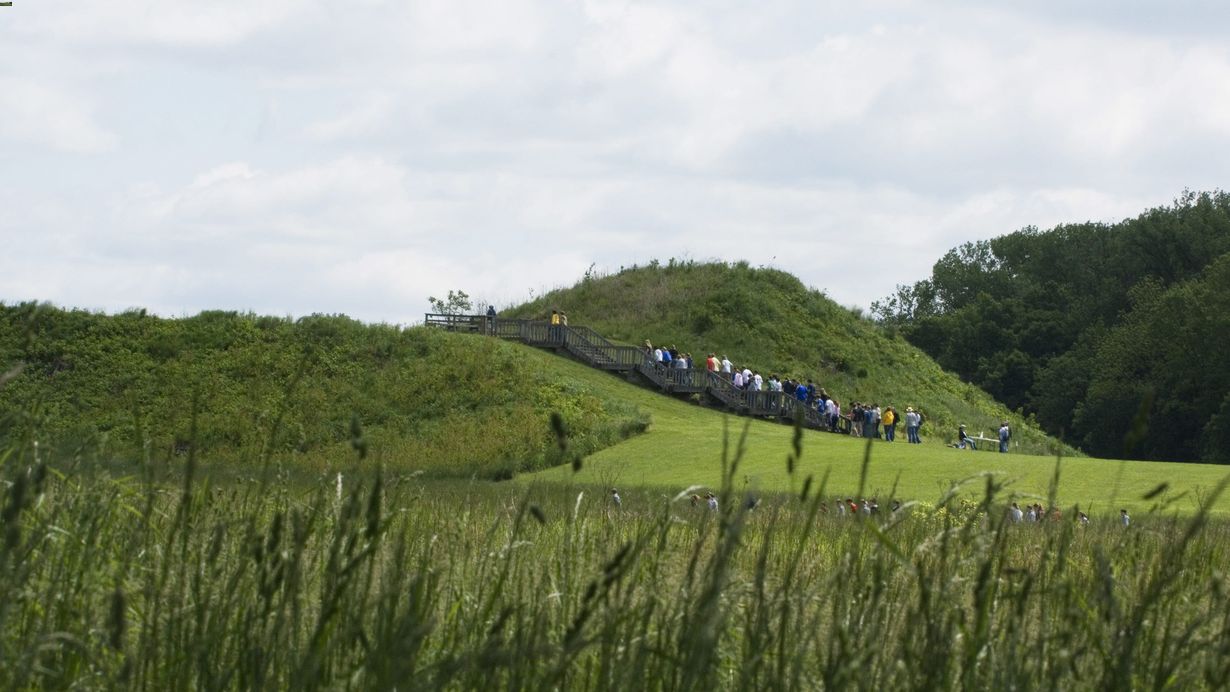
Indiana’s ancient earthworks are scattered across the state, built by Native American cultures over centuries for ceremonial, burial, and community purposes. From the well-preserved Angel Mounds near Evansville to the lesser-known mounds in Sullivan and Greene counties, these sites reveal a complex history of engineering and spiritual life. Here’s what is documented about each location, based on archaeological records and site management.
Discovering Indiana’s Ancient Earthworks
Indiana’s earthworks span from the Mississippian period (1100–1450 AD) at Angel Mounds to the Adena and Hopewell mounds dating to around 160 BC at Mounds State Park. While some sites are open with trails and museums, others remain unexcavated or partially documented. The following list covers the major publicly accessible and research-significant locations.
1. Angel Mounds State Historic Site
Angel Mounds, near Evansville, was a Mississippian community from 1100 to 1450 AD. The site includes reconstructed buildings, a museum with artifacts, and several mounds. Visitors can walk the grounds and view the excavated areas. It is one of the best-preserved prehistoric Native American settlements in the United States.
2. Mounds State Park
Mounds State Park, near Anderson, features ten earthworks built by the Adena and Hopewell cultures, dating to around 160 BC. The largest, the Great Mound, is believed to have served ceremonial purposes. The park offers trails, a nature center, and guided tours that explain the mounds’ alignment and uses.
3. Koteewi Trace
Koteewi Trace, in Strawtown Koteewi Park, reveals Woodland and Mississippian occupations. Excavations have uncovered pottery and tools, and interpretive displays along the trails explain the site’s history. The park also offers canoeing and hiking.
4. Fort Ancient Earthworks
Fort Ancient, located in Ohio, features ancient earthworks similar to those found in Indiana. Built by the Hopewell culture, it features extensive earthen walls and mounds used for ceremonial and social gatherings. While not in Indiana, it is often compared to the state’s earthworks in guide materials.
5. Mann Site
The Mann Site, near Mount Vernon, dates to the Middle Woodland period. It includes numerous mounds and earthworks, some believed to have been used for astronomical observations. Excavations have yielded artifacts that provide insight into the inhabitants’ daily lives, though the site is not open for public visitation.
6. Prather Site
The Prather Site, in Clark County, is a Mississippian culture site with several mounds and evidence of a large village. Archaeologists have uncovered pottery, tools, and other artifacts. The site is not publicly accessible, but its findings are documented in state archaeological records.
7. Goodall Site
The Goodall Site, near LaPorte, dates to the Late Woodland period. It includes several mounds and evidence of a large village. Excavations have revealed artifacts that shed light on the lives of the ancient inhabitants, but the site is not open to the public.
8. Albee Mound
Albee Mound, in Sullivan County, is an Adena culture site believed to have been used for burials. Artifacts recovered include pottery and tools. The mound is on private land, so it is not accessible for touring, but its significance is noted in archaeological surveys.
9. Anderson Mounds
Anderson Mounds, in Madison County, includes earthworks built by the Adena and Hopewell cultures dating to around 160 BC. The site offers trails and interpretive displays. It is managed as a public park, allowing visitors to see the mounds up close.
10. New Castle Mounds
New Castle Mounds, in Henry County, dates to the Late Woodland period. The site includes several mounds and evidence of a large village. Excavations have uncovered artifacts, but the site is not developed for public access.
11. Taylor Mounds
Taylor Mounds, in Greene County, consists of Adena culture earthworks used for burials. Pottery and tools have been recovered from the site. The mounds are on private property, so they are not open to visitors.
12. Sullivan Mounds
Sullivan Mounds, in Sullivan County, dates to the Middle Woodland period. Excavations have revealed artifacts, but the site is not publicly accessible.
13. Fort Harrison Mounds
The site offers trails and interpretive displays. It is part of a public park.
Indiana’s Ancient Earthworks Await
Indiana’s ancient earthworks offer a glimpse into the past. These structures, built by Native American cultures, showcase engineering and spiritual significance. From Angel Mounds to the mounds of Mounds State Park, each site tells a unique story.
Visiting these earthworks provides a chance to connect with history and appreciate the ingenuity of early inhabitants. They remind us of the cultural heritage that exists in our backyard.
Plan a trip to Indiana’s ancient earthworks. You’ll gain a deeper understanding of the region’s history and the people who shaped it. These ancient wonders offer a journey through time that you won’t forget.
Related travel guides: Hidden Secrets In Indiana.
