

New Orleans’ French Quarter hides its grandest homes in plain sight—behind carriageway gates, above shop fronts, and down alleys off the main drag. These are not the party palaces of Bourbon Street but the private mansions of merchants, artists, and one very infamous socialite, each with a story that rewards a slow wander. Here are the hidden mansions worth seeking out, and what you’ll actually find inside each one.
1. The Beauregard-Keyes House
This Greek Revival and Italianate mansion at 1113 Chartres Street was built in 1826. It takes its name from two of its most famous residents: Confederate General P.G.T. Beauregard, who lived here in the 1860s, and novelist Frances Parkinson Keyes, who wrote Madame Castaing’s Book while in residence. The house is furnished with period pieces, and the formal parlor, dining room, and bedrooms look as they might have in the 19th century. Out back, the walled garden is a quiet spot away from the Quarter’s noise, with brick paths and mature oaks. Tours run regularly, and the house is open to the public most days.
Related travel guides: Secret Jazz Speakeasies In New Orleans' French Quarter, Hidden Courtyard Restaurants In New Orleans' French Quarter, and 10 Places To Visit In New Orleans (That Aren’t Bourbon Street).
2. Gallier House
Architect James Gallier Jr. designed this home at 1132 Royal Street as his own residence, completing it in 1857. It was a showcase of mid-19th-century innovation: indoor plumbing, a central ventilation system, and a raised basement that kept the main living quarters cool. The house retains its original mahogany staircase, marble mantels, and a working kitchen with a wood-burning stove. Gallier’s family lived here for decades, and the house stayed in private hands until the 1960s, when it became a museum. Tours point out the details—the etched glass, the plaster cornices, the servant’s bell system—that made this a model of modern comfort in its day.
3. Hermann-Grima House
Built in 1831 for a German immigrant who became a wealthy merchant, this Federal-style mansion at 820 St. Louis Street is a rare surviving example of the city’s early American period. The house is best known for its open-hearth kitchen, where costumed interpreters demonstrate Creole cooking over wood fires using period recipes. The formal dining room and double parlors are furnished with pieces from the 1830s and 1840s, and the courtyard garden is planted with heirloom roses and herbs. The house also has a rare surviving 19th-century stable and slave quarters, which are part of the tour’s discussion of urban slavery in New Orleans.
4. The Lalaurie Mansion
At 1140 Royal Street stands the most infamous address in the Quarter. Built in 1832, this mansion belonged to Madame Delphine Lalaurie, whose household was the subject of a gruesome 1840 fire that revealed evidence of torture and murder in the attic. The story made national headlines, and the house has been called the most haunted in America ever since. The building’s exterior—with its wrought-iron gallery and Greek Revival details—is all that most visitors see, as the house is privately owned and not open for tours. But the grim history is documented in period newspaper accounts, and the current owners have allowed exterior photographs only. If you want the full story, the guided ghost tours that pass by here tell the tale in detail.
5. The Soniat House
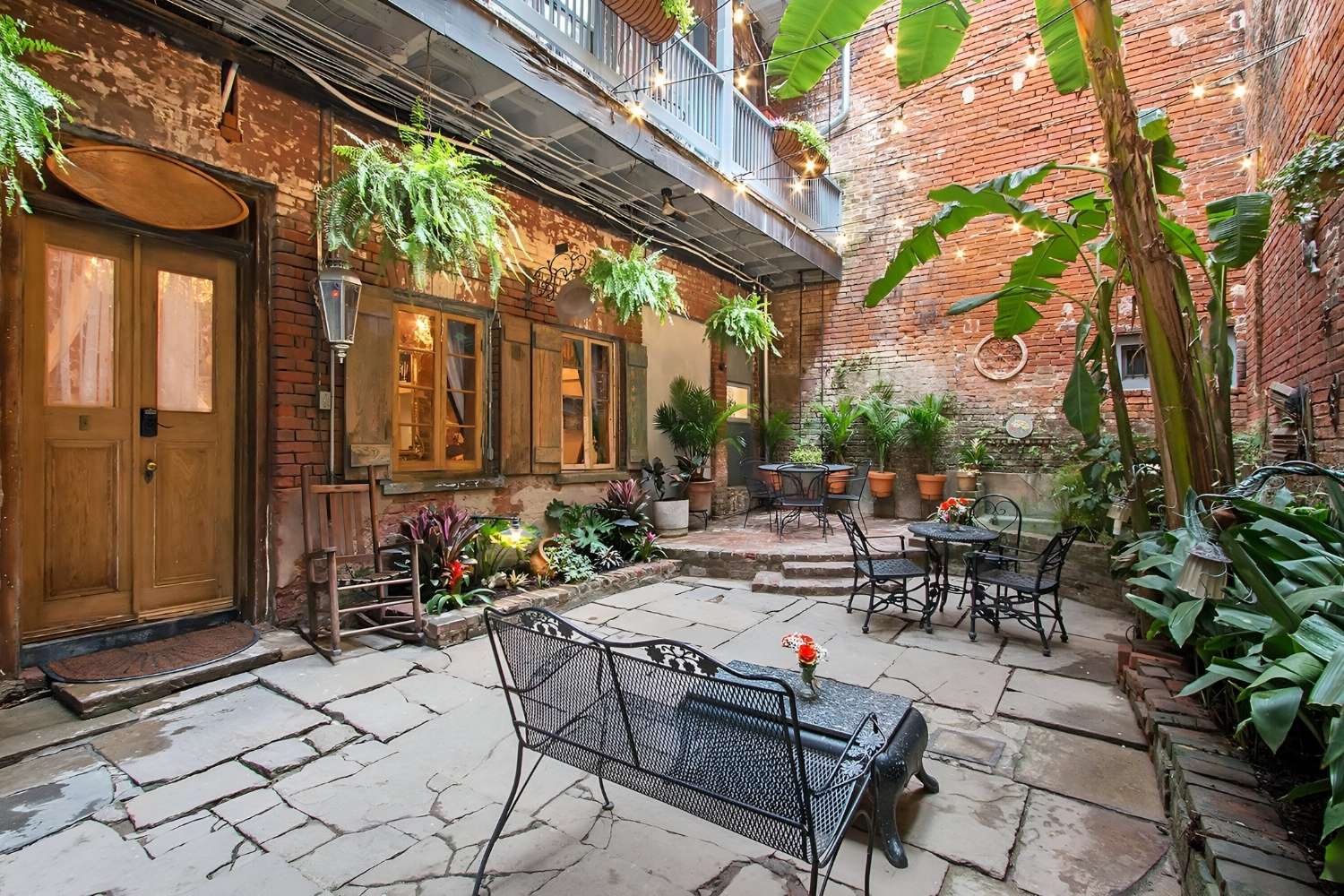
This complex of three Creole townhouses at 1133 Chartres Street was built in the 1820s and has been a boutique hotel since the 1980s. The rooms are filled with antiques—four-poster beds, armoires, and oil paintings—and the courtyards are planted with banana trees and fountains. The hotel’s carriageway opens onto a quiet patio, and the upper floors have balconies overlooking the street. Staying here is not cheap, but you don’t have to be a guest to see the architecture: the hotel’s public rooms are open for viewing during the day, and the staff will often let you peek into a courtyard or two. The address is also notable for its connection to writer Anne Rice, who set scenes from her Vampire Chronicles in this very block.
6. The Old Ursuline Convent
This is not a mansion, but it is one of the oldest buildings in the city and worth a detour. The Ursuline Convent at 1100 Chartres Street was built in 1752 and is the oldest surviving building in the Mississippi Valley. The nuns who lived here ran a school, an orphanage, and a hospital, and they sheltered women and girls during the colonial era. The building’s architecture is a mix of French Colonial and Spanish styles, with thick walls and a steep roof. Tours are limited and must be booked in advance; they cover the chapel, the cloister, and the garden. The convent’s history is tied to the city’s founding families, and the tour includes documents and artifacts from that era.
7. The Cornstalk Hotel
At 915 Royal Street, this Victorian mansion is famous for its cast-iron fence shaped like cornstalks, complete with morning glories and a monkey climbing the post. The house was built in the early 1800s, and the fence was added later, in the 1850s, as a tribute to the owner’s wife, who missed the cornfields of her native Mississippi. The hotel has hosted a string of celebrities over the years—the guest book includes names like Franklin D. Roosevelt and Elizabeth Taylor. The interior is ornate, with period furniture and a grand staircase. The hotel is open to guests only, but you can see the fence and the facade from the street, and the staff will sometimes let you peek into the lobby if you ask.
8. The Degas House
This mansion was once home to the French Impressionist painter Edgar Degas. Built in the 1850s, the Degas House offers tours that delve into the artist’s life and work. The house is a blend of French and Creole styles, reflecting the cultural melting pot that is New Orleans. Degas lived here during the winter of 1872–73, and he painted several scenes of the city from the house’s windows, including The Cotton Exchange and Portrait of the Bellelli Family. The house is now a museum and event space, and the tours include a look at the artist’s studio, the family’s dining room, and the courtyard. Note that the house is on Esplanade Avenue, just outside the French Quarter’s boundaries—a short walk from the north edge of the Quarter, but not technically within it.
Practical Tips for Your Mansion Walk
Most of these houses are open for tours on a set schedule, so check the individual websites before you go. The Beauregard-Keyes, Gallier, and Hermann-Grima houses are all within a few blocks of each other, so you can cover them in a single morning. The Lalaurie Mansion and the Cornstalk Hotel are on Royal Street, a 10-minute walk north. The Soniat House is a hotel, so you can pop in during the day without a reservation. The Ursuline Convent requires a timed ticket. Wear comfortable shoes—the Quarter’s sidewalks are uneven—and bring water, especially in summer. If you’re short on time, the Beauregard-Keyes and Gallier houses are the best value, with detailed tours and well-preserved interiors. The Degas House is worth the extra walk, but factor in the distance and plan your route accordingly.
