

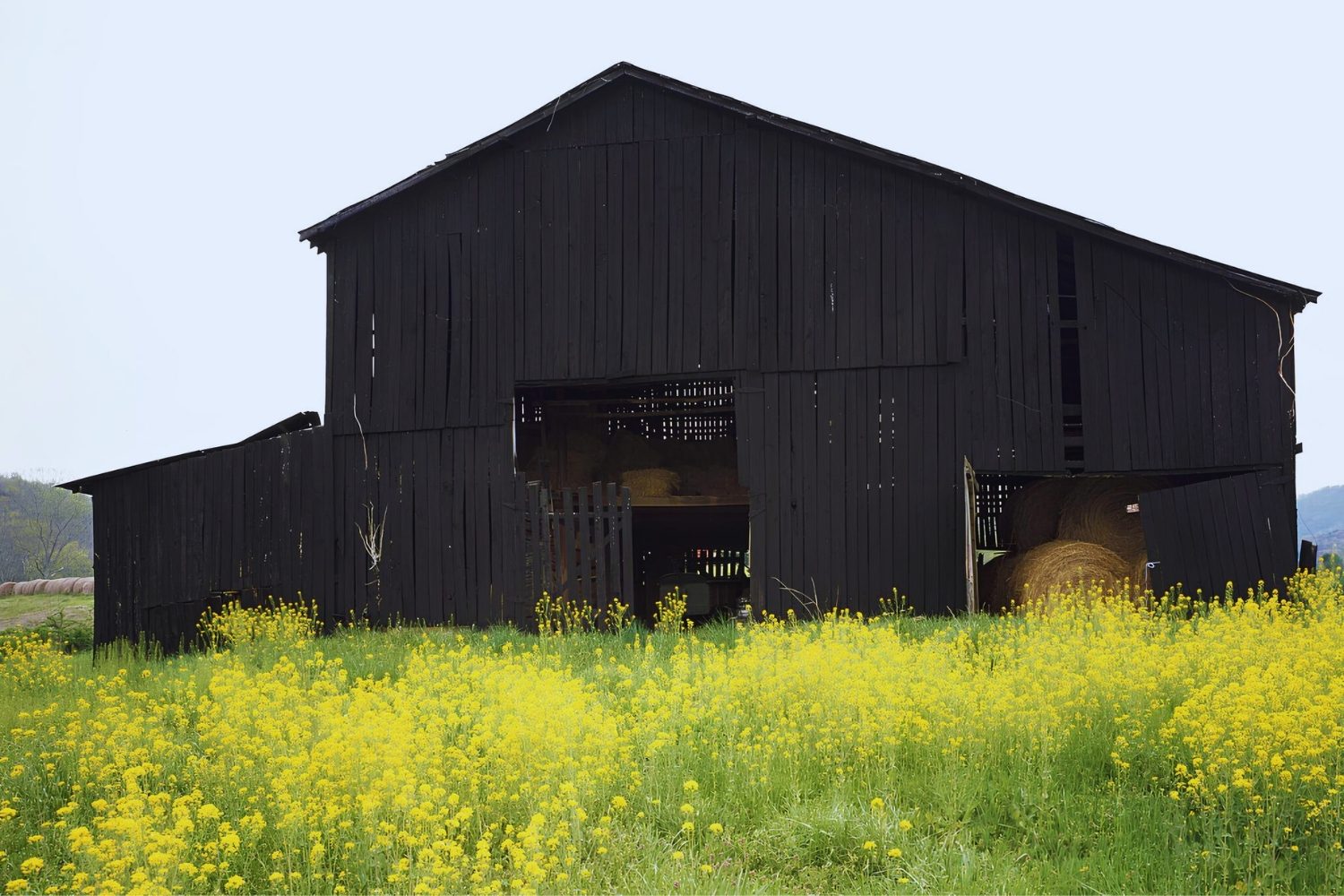
Kentucky’s hidden tobacco barns dot the countryside as weathered monuments to a farming economy that defined the state through the 20th century. Built primarily in the 20th century, they played a crucial role in the state's economy, and today they reward travelers who take the back roads with a tangible link to that agricultural past. These are the places to seek out if you want to see them before time and weather claim them entirely.
The Charm of Historic Tobacco Barns
Each one tells a tale of the farmers who built them and the communities that thrived around them. Here are some of the most charming historic tobacco barns in Kentucky.
-
Blackacre State Nature Preserve and Historic Homestead
Located in Louisville, this barn is part of a 170-acre nature preserve. The barn, built in the 1800s, stands as a testament to the agricultural heritage of the area. Visitors can explore the barn and learn about traditional tobacco farming methods. -
Shaker Village of Pleasant Hill
This barn, found in Harrodsburg, is part of a larger historic site. The Shakers, known for their simple living and innovative farming techniques, used this barn for drying tobacco. The village offers guided tours that include a visit to this well-preserved barn.
Unique Architectural Styles
Kentucky's tobacco barns come in various architectural styles, reflecting the diverse influences and practical needs of the farmers who built them.
-
The Red Barn at Ashland, The Henry Clay Estate
Situated in Lexington, this barn is part of the estate of Henry Clay, a prominent 19th-century politician. The bright red barn stands out against the lush green landscape. Its design includes large doors and high ceilings, perfect for air-drying tobacco. -
The Barn at My Old Kentucky Home State Park
Located in Bardstown, this barn features a classic design with a steeply pitched roof and wide eaves. It is part of the historic site that inspired the song "My Old Kentucky Home." The barn's architecture provides insight into the practical needs of tobacco farmers.
Hidden Gems Off the Beaten Path
Some of Kentucky's most fascinating tobacco barns are tucked away in less-traveled areas. These hidden gems offer a more intimate look at the state's agricultural history.
-
The Barn at Penn's Store
Found in Gravel Switch, this barn is part of the oldest country store in America. The barn, still used for drying tobacco, offers a glimpse into the daily life of rural Kentucky. Visitors can explore the store and the barn, experiencing a piece of living history. -
The Tobacco Barn at Land Between the Lakes
This barn, located in the Land Between the Lakes National Recreation Area, is a hidden treasure. Surrounded by natural beauty, the barn provides a serene setting for learning about traditional tobacco farming. The area offers hiking trails and other outdoor activities.
Preserving the Legacy
Efforts to preserve these barns ensure that future generations can appreciate Kentucky's rich agricultural heritage. Here are some barns that have been restored and maintained for educational purposes.
-
The Barn at the Kentucky Horse Park
In Lexington, this barn has been restored to its former glory. It now serves as an educational center where visitors can learn about the history of tobacco farming in Kentucky. The park also offers horse-related activities, making it a great family destination. -
The Barn at the Homeplace 1850s Working Farm
Located in the Land Between the Lakes area, this barn is part of a living history farm. The barn has been carefully preserved to show how tobacco was dried and stored in the 1850s. The farm offers hands-on activities and demonstrations.
Practical Considerations for Your Visit
Before you head out, note that most of these barns sit on private property or within active historic sites, so always check visiting hours and access policies. The Land Between the Lakes area, for example, offers public trails that pass near several barns, but the structures themselves may be fenced off. For the most rewarding experience, visit during the drier months—late spring through early fall—when the countryside is most accessible. And if you're planning a broader trip, consider pairing your barn hunt with a stop at one of the region's scenic byways; the rolling hills around Harrodsburg and Bardstown are best appreciated at a slow pace.
Why These Barns Matter
Kentucky's tobacco barns are more than just old buildings; they are symbols of the state's rich agricultural history. Each barn has its own story, waiting to be discovered. Whether you're a history buff, an architecture enthusiast, or just looking for a unique adventure, these barns offer something for everyone. The craftsmanship on display—from hand-hewn beams to carefully fitted joints—reflects a time when farmers built to last, and their work has endured through decades of Kentucky weather.
Beyond their visual appeal, these structures also serve as a reminder of the labor and community that shaped the region. Tobacco farming was never an easy life, but it built towns, supported families, and created a distinct cultural identity that still resonates today. When you stand inside one of these barns, you're not just looking at wood and nails; you're standing in the middle of a story that spans generations.
So next time you're in the Bluegrass State, take a moment to appreciate these hidden gems. They stand as silent witnesses to a bygone era, waiting to share their secrets with those who seek them out. Kentucky's tobacco barns are not just relics of the past; they are a testament to the enduring spirit of the people who built and used them. Whether you're tracing your family's farming roots or simply chasing a quiet afternoon drive, these barns offer a rare chance to slow down and connect with something real.
Related travel guides: Hidden Tobacco Barns Of Ontario, Hidden Tobacco Barns Of Connecticut, and Hidden Tobacco Barns Of Tennessee.
