

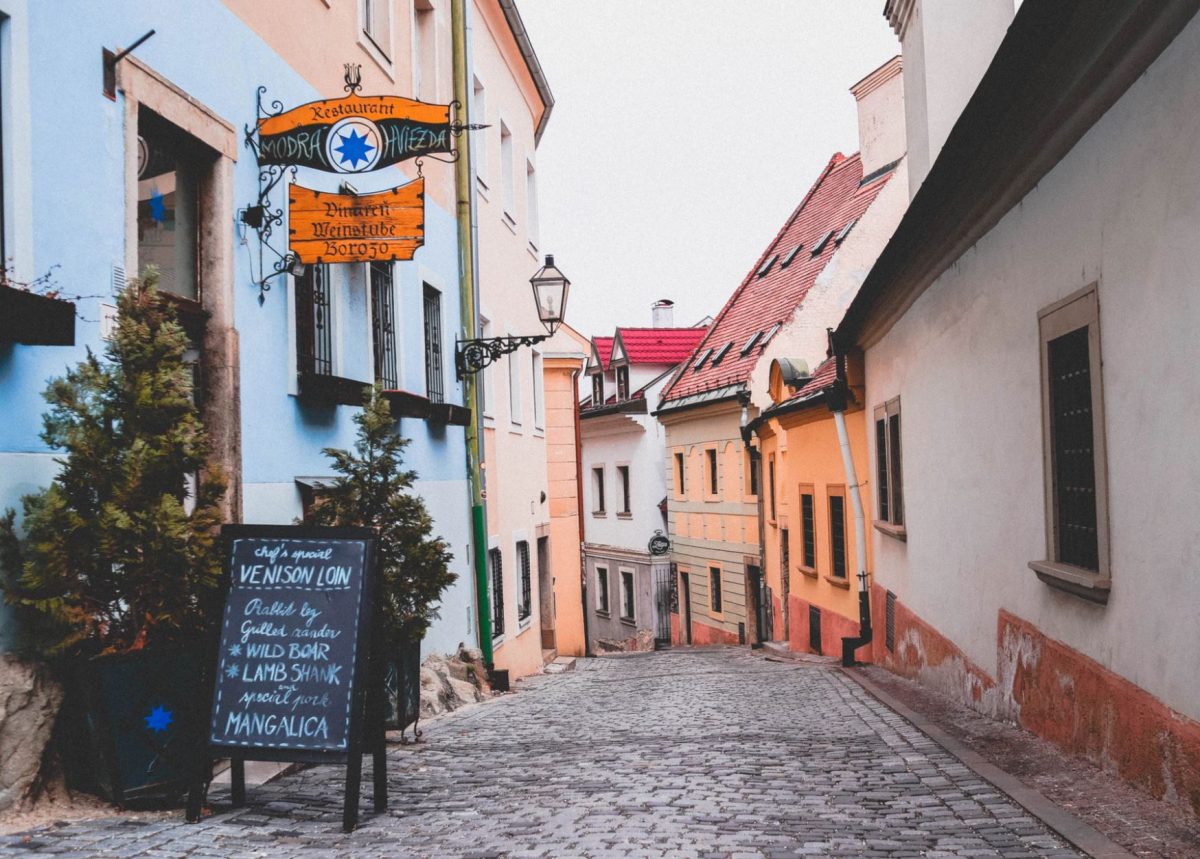
Part of our Slovakia guide.
2 places and guides from our Travel Inspiration coverage, gathered into one page.
Related travel guides: Travel Inspiration In California, Travel Inspiration In Croatia, Hnausapollur Crater Lake's Hidden View, Secrets Of Kirkjufell Mountain Walk, Meteora Greece's Hidden Hermit Caves, and Mystery Of Bláhylur Blue Pool Crater.
The Most Beautiful Places You Must Visit In Slovakia
Slovakia ranges from the Polish borderlands in the north to the snaking Danube in the south. It covers some seriously awesome corners of Central-Eastern Europe. They include the mighty Tatra ranges with their ski fields and cloud-shattering summits. There are also deep, dank caves formed by ancient karsts and gushing riverways. And fir forests topped by massifs, and glistening lakes ringed by hiking paths make an appearance to boot. But the most beautiful places to visit in Slovakia aren't just about the great European outdoors.
Start with the High Tatras, the country's highest mountain range, where peaks like Gerlachovský štít rise above 2,600 metres. Here, you can ride the cable car from Tatranská Lomnica to Lomnické sedlo at 2,636 metres for panoramic views of the alpine landscape. Hiking trails circle Štrbské Pleso, a glacial lake at 1,346 metres, or climb to the summit of Rysy, the highest point in Poland at 2,499 metres, accessible from the Slovak side. In winter, the ski resorts of Jasná in the Low Tatras offer 49 kilometres of slopes, with a day lift pass costing around €45 in the 2023–2024 season.
Beneath the surface, Slovakia's karst landscapes hide hundreds of caves. The Domica Cave, part of the UNESCO-listed Aggtelek Karst system, stretches 5 kilometres across the border into Hungary, with guided tours lasting 45 minutes and costing €8 for adults. The Dobšinská Ice Cave, a UNESCO World Heritage site, maintains a year-round temperature of around 0°C and features ice formations up to 26 metres thick; entry is €10. For a different kind of underground experience, the Demänovská Cave of Liberty near Liptovský Mikuláš offers a 1.2-kilometre walking route through stalactite chambers, with tickets at €12.
Castles dot the countryside, with over 100 surviving fortifications. Spiš Castle, one of the largest castle complexes in Central Europe, sits on a travertine hill above Spišské Podhradie and covers 4 hectares; admission is €8, and the site includes a Romanesque palace and a Gothic chapel. Orava Castle perches on a 112-metre-high rock above the Orava River, with guided tours in English available for €10. Bojnice Castle, a romantic fairy-tale structure with a moat and a zoo, charges €11 for entry and hosts an annual International Festival of Ghosts and Spirits in May.
In the south, the Danube River forms the border with Hungary and flows through Bratislava, the capital. The city's Old Town features the 13th-century St. Martin's Cathedral, where Hungarian kings were crowned, and the Primate's Palace, home to the Hall of Mirrors and a collection of 17th-century English tapestries. A walking tour of the historic centre costs around €15 per person. Across the river, the UFO observation deck at the SNP Bridge stands 95 metres tall and offers 360-degree views; entry is €8.70.
Facts & Trivia: 10 Things Foreigners Should Know
As a foreigner venturing into this enchanting land, it's essential to familiarize yourself with some key facts and trivia to ensure a memorable and enjoyable experience. Slovakia, officially known as the Slovak Republic, is a landlocked country bordered by five countries – Austria to the west, the Czech Republic to the northwest, Poland to the north, Hungary to the south, and Ukraine to the east. Slovakia is known for its diverse natural beauty, picturesque castles, rich cultural heritage, and warm and welcoming people.
The country uses the euro (€), adopted in 2009, and the official language is Slovak, a West Slavic language closely related to Czech. Tipping is customary: 10% in restaurants is standard, and rounding up the fare for taxi drivers is common. Tap water is safe to drink across most of the country, and public transport in cities like Bratislava and Košice runs on a single ticket system costing €0.90 for a 30-minute ride in 2024. Emergency services can be reached by dialling 112, and the country's electricity supply is 230 V with a standard European two-pin plug.
