

Part of our Iceland guide.
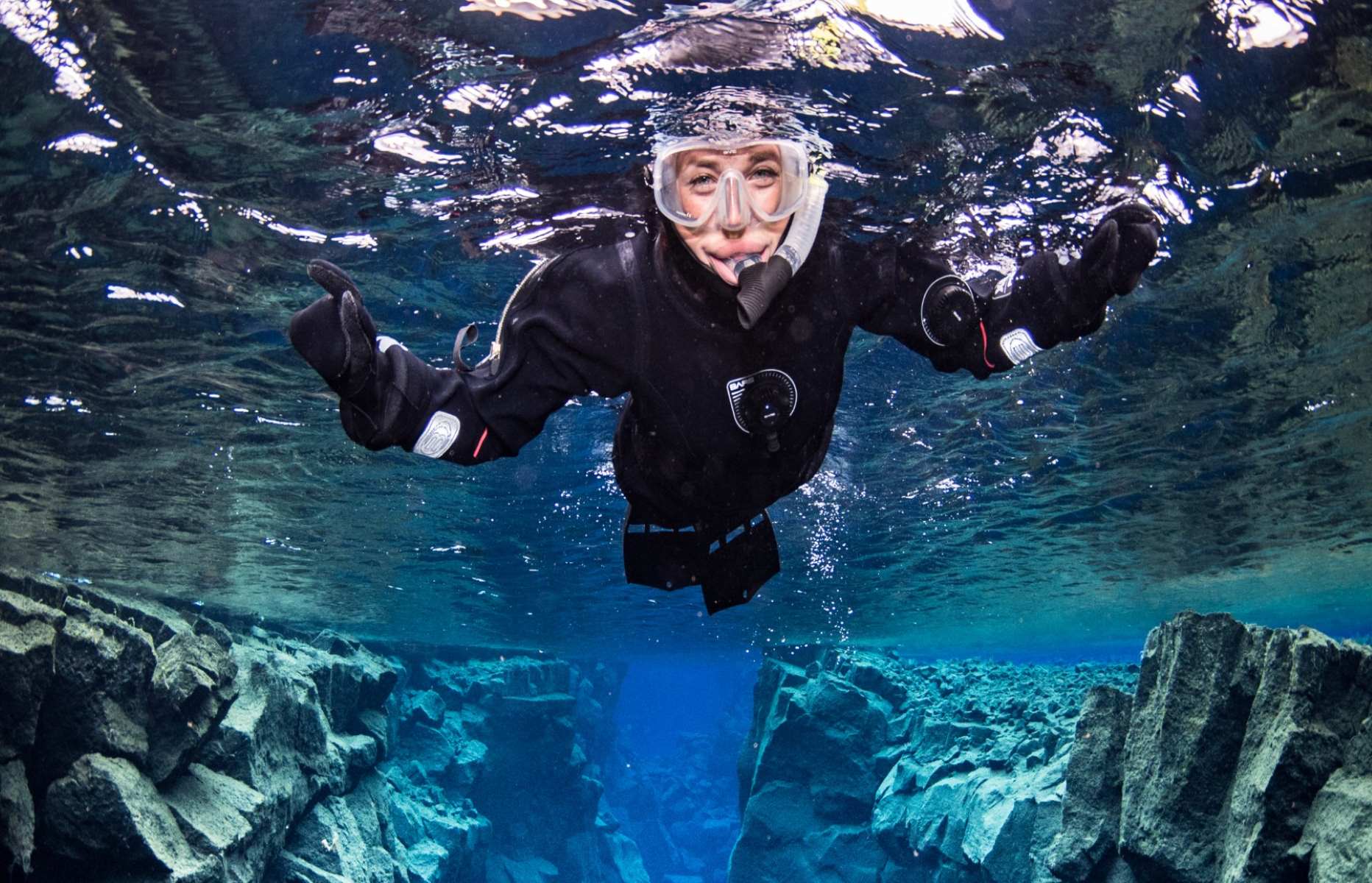
Snorkeling Silfra in winter lets you float between two tectonic plates in water so clear you can see 100 meters. The rift sits inside Thingvellir National Park, a UNESCO World Heritage Site, and is one of the few places on Earth where you can snorkel directly in the gap between the North American and Eurasian plates.
Related travel guides: Events And Seasons In Iceland.
Attractions | What Happens When You Snorkel Silfra In Winter
You wear a dry suit that traps a layer of warm air, so the 2°C to 4°C water never touches your skin. The visibility exceeds 100 meters because glacial meltwater filters through porous lava rock for decades before reaching the fissure. Winter brings fewer crowds and a chance of seeing the Northern Lights from the parking lot after your session. The entire experience, including gear, guided instruction, and a hot drink afterward, typically lasts two to three hours. You must book in advance; walk-ups rarely get a spot.
South Coast Iceland | How To Explore This Amazing Attraction
Drive east from Reykjavik on the Ring Road, and within 90 minutes you reach Seljalandsfoss waterfall, where you can walk behind the cascade. Another 20 minutes brings Skógafoss, a 60-meter drop that creates rainbows on sunny afternoons. The black sand beach at Reynisfjara, 30 minutes further, has basalt columns and powerful waves—never turn your back on the surf. The glacier tongue Sólheimajökull offers guided hikes that last two to three hours. All these stops are on the same road, making the South Coast an easy day trip or a two-day loop if you stay overnight in Vík.
Things To Do In Iceland | 19 Amazing Experiences Beyond The Blue Lagoon
The Blue Lagoon is a geothermal spa, but Iceland has dozens of other natural pools. The Secret Lagoon in Flúðir costs about 3,000 ISK and is the oldest swimming pool in the country. Landmannalaugar, in the highlands, has hot springs surrounded by rhyolite mountains—accessible only by 4×4 from late June to September. For hiking and the outdoors in Iceland, the Laugavegur trail runs 55 km from Landmannalaugar to Þórsmörk, passing through rainbow-colored hills and black deserts. Jökulsárlón glacier lagoon, on the southeast coast, has floating icebergs that drift toward the ocean; you can take a Zodiac boat tour among them for about 10,000 ISK. The nearby Diamond Beach, where icebergs wash up on black sand, is free and open year-round. For natural wonders and activities in Iceland, the Snæfellsnes Peninsula packs a glacier, a crater, and basalt sea cliffs into a 200 km loop from Reykjavik. The beaches in Iceland include Rauðasandur, a red sand beach in the Westfjords, and Nauthólsvík, a geothermal beach in Reykjavik with free hot tubs. If you want hidden gems in Iceland, drive to the abandoned plane wreck on Sólheimasandur—a 4 km walk across black sand—or visit the turf houses at Glaumbær in Skagafjörður. The planning your trip in Iceland basics: rent a 4×4 if you go off the Ring Road, fill up gas when you see a station, and bring waterproof layers even in July. The Blue Lagoon is not the only geothermal spa; Mývatn Nature Baths in the north cost about 5,500 ISK and have fewer visitors. For a free soak, hike to the hot spring river at Reykjadalur, a 45-minute walk from the parking lot near Hveragerði.
