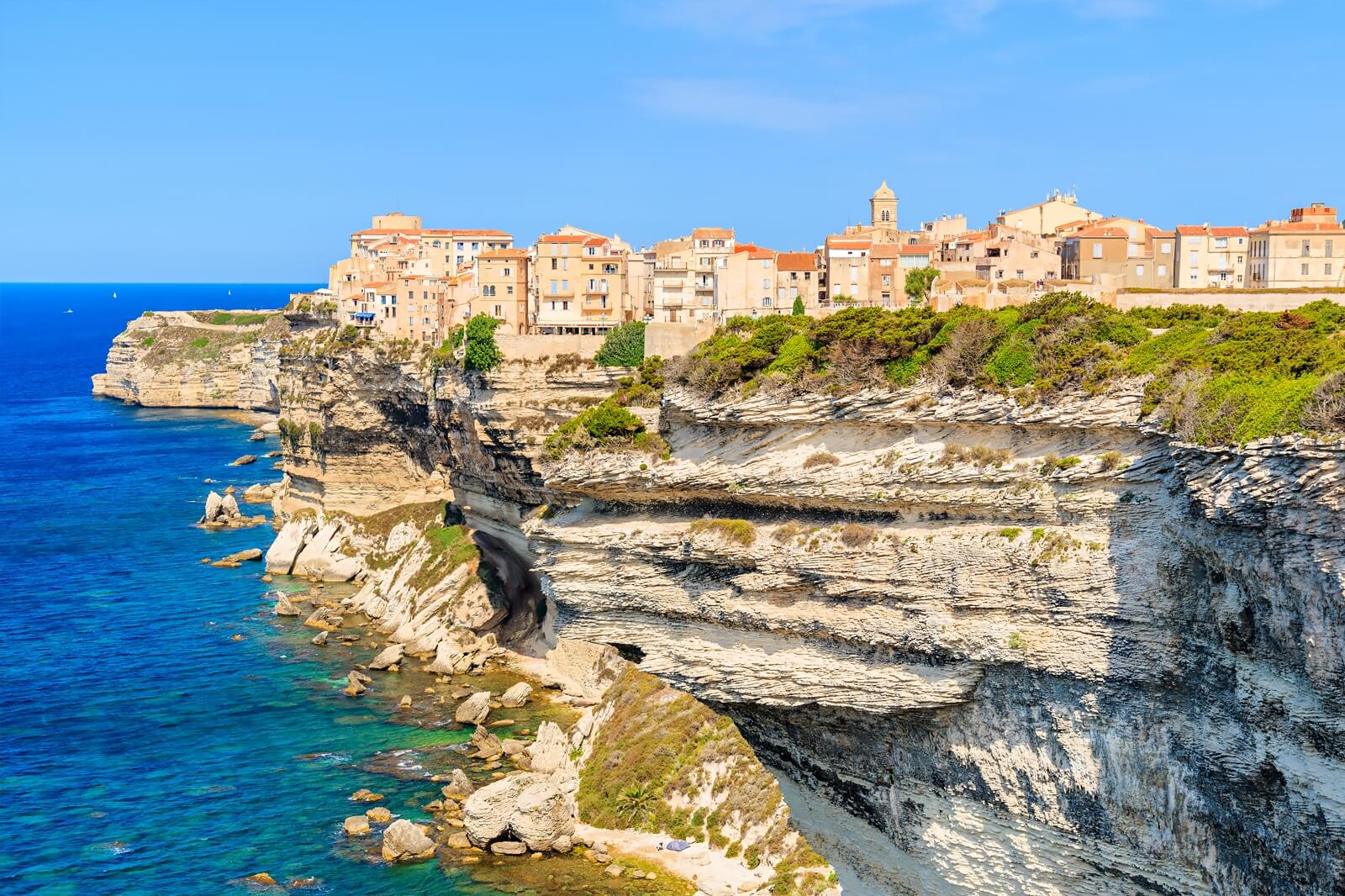
Exploring the medieval citadel of Bonifacio means climbing through a 9th-century fortress carved onto a Corsican cliff. The real reward, though, is the dizzying view of the azure Mediterranean from its limestone edge. You enter through the Porte de Gênes into narrow cobbled streets and stone buildings that have weathered sieges, pirate attacks, and changing rulers since the Genoese fortified it in the 13th century. Today, those same walls frame a walk through centuries of history.
History of Bonifacio
The history of Bonifacio dates back to ancient times, with evidence of human settlement in the area as far back as the Bronze Age. However, it was during the Middle Ages that the city flourished and the citadel began to take shape.
Founded in the 9th century by the Marquis of Tuscany, Bonifacio quickly became an important maritime and trading center in the Mediterranean region. Its strategic location made it a coveted prize for various competing powers, including the Genoese, Pisans, and Aragonese.
Throughout its history, Bonifacio faced numerous invasions and sieges. In the 13th century, the Genoese took control of the city, fortifying it and building the iconic citadel as a defense against potential attackers. The citadel's high walls and strategic positioning on the edge of the cliff provided unparalleled protection.
Over the centuries, Bonifacio endured a turbulent past, marked by conflicts, occupation, and changing rulers. It survived attacks from pirates, was occupied by the French during the Napoleonic era, and witnessed the struggles of Corsican nationalists seeking independence.
Despite its tumultuous history, Bonifacio managed to maintain its unique identity and cultural heritage. Today, remnants of the city's past can be found in the well-preserved architecture of the citadel, offering visitors a glimpse into the city's storied history. One entrance to the citadel is through the Porte de Gênes, a grand gateway that leads visitors into the heart of the fortified city. Today, it stands proudly as a historic site, drawing visitors from near and far to explore its ancient streets and revel in its historical splendor.
From its humble beginnings as a trading post to its role as a strategic stronghold, the history of Bonifacio is a captivating tale of resilience and perseverance. The citadel, with its rich historical significance, stands as a reminder of the city's enduring legacy and the resilience of its people. For anyone following a travel guide in France, this citadel is a must-see stop on any Corsican itinerary, and its layered past rewards those who seek out hidden gems in France.
Location and Geography
Situated on the southern coast of the island of Corsica, the medieval citadel of Bonifacio commands a striking position atop a towering limestone cliff overlooking the Mediterranean Sea. This location offers views of the surrounding coastline.
The city of Bonifacio is separated into two distinct parts. The upper town, known as the citadel, is perched on the cliff and is the ancient fortified center. The lower town lies at the base of the cliffs, with its bustling harbor, vibrant streets, and charming shops.
The limestone cliffs, sculpted by centuries of erosion, create a striking backdrop. The sheer drop from the cliff edge to the sea below is awe-inspiring, and the natural beauty enhances the appeal of the citadel.
The city is also surrounded by white sandy beaches, hidden coves, and crystal-clear turquoise waters. This combination of cliffs, waters, and beaches makes Bonifacio a remarkable destination. For those who appreciate nature, Bonifacio offers opportunities to explore marine caves and secluded beaches, or to embark on hiking trails along the cliffs. If you are planning a trip, consider what to pack for a trip to France in advance to make the most of these outdoor activities.
Bonifacio's location and geographical features contribute to its allure, making it a destination for nature lovers, history enthusiasts, and those seeking a remarkable travel experience.
Construction and Architecture of the Citadel
The construction and architecture of the citadel of Bonifacio are a testament to the ingenuity and craftsmanship of the medieval builders. The citadel, with its fortified walls, imposing towers, and intricate details, stands as a remarkable example of medieval military architecture.
The citadel was primarily constructed using the locally available limestone, which blends seamlessly with the natural surroundings. The use of this stone not only provided a strong and durable material but also created a visually striking appearance that complements the rugged cliffs upon which the fortress is perched.
The entrance is flanked by two watchtowers, which provided a vantage point for surveillance and defense. The watchtowers stand as reminders of the citadel's strategic importance and the need to protect against potential invaders.
Inside the citadel, narrow and winding streets traverse the fortified area, revealing a labyrinthine layout that was designed to confuse attackers. The buildings within the citadel are characterized by their stone facades, wooden balconies, and traditional tiled roofs, showcasing the architectural style of the region during the medieval period.
One of the most notable features of the citadel is the Bastion de l'Etendard, a large tower that overlooks the sea. This tower served as a defensive stronghold, giving commanding views of the surrounding area and providing a crucial advantage during times of conflict.
The construction and architecture of the citadel were also influenced by the military engineering techniques of the time. The fortified walls, with their crenellations and loopholes for archers, showcase the defensive purpose of the citadel. Features such as brattices, machicolations, and hoardings were integrated into the design to allow defenders to drop projectiles or boiling liquids on attackers.
Overall, the construction and architecture of the citadel of Bonifacio reflect both the functional requirements of a medieval fortress and the aesthetic sensibilities of the time. Visiting the citadel allows travelers to step back in time and marvel at the skilled craftsmanship and strategic foresight of the medieval builders. For those using a travel guide in France, this citadel is a must-see, and planning ahead can help you get to Mont Saint Michel on a cruise from the region.
The Strategic Importance of the Citadel
The medieval citadel of Bonifacio held immense strategic importance due to its unique location and defensive capabilities. Perched atop a towering cliff, the citadel offered an unrivaled vantage point, allowing its occupants to monitor and control maritime trade routes in the Mediterranean Sea.
From its elevated position, the citadel provided an ideal setting for keeping an eye on potential invaders and defending against attacks. Its fortified walls, watchtowers, and bastions served as powerful deterrents, while its strategic placement allowed for effective surveillance and defense.
The citadel's proximity to the sea made it a crucial stronghold for controlling shipping lanes, protecting trade routes, and fending off hostile naval forces. In times of war and conflict, having control of Bonifacio meant gaining a significant advantage in terms of power projection in the region.
The city's fortified walls were designed to withstand attacks, with thick stone structures and defensive features such as battlements and arrow slits. These defensive measures allowed the citadel to withstand sieges and repel assault attempts, ensuring the safety of its inhabitants.
Furthermore, Bonifacio's strategic location at the southern tip of Corsica offered access to and control over the neighboring islands, such as Sardinia and the Tuscan Archipelago. This further enhanced its strategic importance, as it allowed for the projection of influence beyond the immediate vicinity.
Throughout history, the citadel of Bonifacio witnessed numerous conflicts and sieges, highlighting its strategic significance. Its well-defended position and control over key maritime routes made it a desirable target for rival powers seeking dominance in the region.
Even in times of relative peace, the strategic importance of the citadel persisted. It served as a base for naval operations, protecting the coastal waters and ensuring the security of the surrounding territories.
The citadel remains a key stop on any travel guide in France, offering a tangible link to the region’s medieval past.
Daily Life in the Medieval Citadel
Life in the medieval citadel of Bonifacio was tightly interwoven with the fortified walls and the strategic position of the city. The daily routines and activities of its inhabitants were shaped by the constant need for defense and sustenance in an often uncertain and perilous environment.
Within the citadel walls, the narrow streets were bustling with activity. Craftspeople, merchants, and residents went about their daily tasks, trading goods necessary for daily life. Artisans worked in small workshops, producing textiles, pottery, and metalwork, while traders facilitated exchange both within the citadel and beyond its walls. For those planning a visit, this area is a highlight of any travel guide in France.
The citadel hosted a diverse population, including soldiers, nobles, clergy, and commoners. The nobility occupied grand residences within the fortified walls, while commoners lived in more modest dwellings. The church played a central role, with religious ceremonies providing solace and guidance to the community.
Inhabitants relied heavily on the surrounding fertile land for sustenance. Agriculture was crucial, with residents cultivating wheat, barley, and vegetables. Livestock—cows, sheep, and goats—were kept for milk, meat, and other products.
In times of conflict, the citadel became a refuge, offering security behind its fortified walls and defensive structures. Watchtowers and lookout points allowed early detection of approaching dangers.
Social interactions were shaped by the close-knit community. Festivals, events, and communal gatherings provided opportunities to celebrate and find solace in the company of fellow dwellers.
While daily life had its challenges, it was also a time of community, craftsmanship, and resilience. The inhabitants forged a unique way of life, adapting to their surroundings while cherishing the bonds of their fortified community.
Decline and Abandonment of the Citadel
Despite its once flourishing existence, the medieval citadel of Bonifacio eventually experienced a decline that led to its abandonment. Several factors contributed to this gradual deterioration and eventual desertion of the fortified city.
One primary factor was the improvement in maritime technology and the shift in trade routes. As ships became larger and more advanced, they could navigate waters once considered treacherous, lessening the need for a strategically positioned trading center like Bonifacio and causing a decline in the city's economic importance.
In addition, the evolution of warfare and the development of artillery rendered the fortified walls less effective in defending against attacks. The once formidable defenses became vulnerable to bombardment, making the citadel more susceptible to conquest.
The decline in political influence also played a significant role. The shifting powers in the region, including domination by the Genoese and the eventual annexation of Corsica by France, led to a loss of independence and diminished importance for Bonifacio.
Furthermore, changing social and economic dynamics contributed to the decline. The population within the walls began to decline as people sought better opportunities and more comfortable living conditions outside the confined fortress. People gradually migrated to the lower town and other parts of Corsica in search of a more prosperous life.
Over time, the citadel fell into disrepair and was largely forgotten. Vandalism, neglect, and the ravages of time took their toll on the once-majestic structures. Many buildings crumbled, and the streets became overgrown with vegetation.
Fortunately, in recent years, efforts have been made to preserve and restore the citadel, recognizing its historical and cultural significance. These restoration initiatives aim to revive the citadel and bring it back to its former glory, allowing visitors to experience the medieval ambiance and appreciate the rich heritage of Bonifacio. For those following a travel guide in France, the citadel offers a compelling stop.
Today, the citadel stands as a captivating reminder of its tumultuous past and serves as a window into the history of this remarkable fortified city. Exploring its ruins and imagining the bustling life that once filled its streets offers a glimpse into a bygone era.
Rediscovery and Restoration Efforts
After years of neglect and abandonment, the medieval citadel of Bonifacio began to experience a renaissance through rediscovery and restoration efforts. Recognizing its historical and cultural significance, initiatives were undertaken to preserve and revive the crumbling structures and revive the spirit of the fortified city.
The rediscovery of the citadel began in the late 19th century when the importance of preserving historical monuments gained traction. Archaeologists and historians started exploring the ruins, uncovering hidden treasures and shedding light on the citadel's rich past. Their findings further fueled the desire to restore the citadel to its former glory.
Restoration efforts commenced in the mid-20th century, with a focus on preserving the architectural integrity of the citadel while ensuring historical accuracy. Skilled craftsmen and architects meticulously restored the crumbling buildings, employing traditional construction techniques and using locally sourced materials to maintain the authenticity of the fortress.
One of the key restoration projects was the Bastion de l'Etendard, a prominent tower within the citadel. This complex undertaking involved stabilizing the structure, repairing its damaged sections, and reinforcing its foundations. Today, the Bastion stands as a testament to the successful restoration efforts and serves as a beacon of hope for the preservation of the citadel.
Another significant restoration endeavor was the revitalization of the citadel's historic streets and public spaces. Overgrown vegetation was removed, and the cobblestone streets were meticulously repaired to recreate the medieval atmosphere. Historical street lamps were installed, casting a warm glow and adding to the enchanting ambiance of the citadel.
These restoration efforts were complemented by numerous educational and awareness programs aimed at promoting the appreciation of Bonifacio's cultural heritage. Visitors are encouraged to learn about the history of the citadel through guided tours, museums, and informational signage, creating a deeper connection with the fortress and its significance.
Through the combined efforts of passionate individuals, local communities, and governmental organizations, the medieval citadel of Bonifacio has been given a new lease of life. The ongoing restoration projects ensure that future generations can experience the enchantment and marvel at the architectural legacy of this historic fortress.
While the process of restoring the citadel is ongoing, the efforts made so far have breathed new life into this once forgotten fortified city. Today, the citadel shines as a testament to human perseverance, providing a living link to the past and offering a memorable experience for all who visit. For those planning a trip, this citadel is a must-see on any travel guide in France itinerary, and visitors should know what to pack for a trip to France in comfortable walking shoes to explore its restored streets.
Exploring the Citadel Today
Exploring the medieval citadel of Bonifacio today is a captivating journey into the past, allowing visitors to immerse themselves in the rich history and architectural beauty of this magnificent fortress.
As you wander through the narrow, winding streets of the citadel, you'll be transported back in time. The well-preserved stone buildings, adorned with wooden balconies and traditional tiled roofs, evoke a sense of medieval charm and authenticity.
One of the highlights of exploring the citadel is walking along its fortified walls. From the top, you can enjoy breathtaking panoramic views of the surrounding cliffs, the azure waters of the Mediterranean Sea, and the picturesque lower town. The view from the Bastion de l'Etendard is particularly awe-inspiring.
Visitors can delve even deeper into the history of the citadel by stepping inside the Musee du Bastion. This museum offers a fascinating collection of artefacts, displays, and interactive exhibits that shed light on the citadel's past. From weaponry and armor to archaeological discoveries, the museum provides a comprehensive glimpse into the lives of those who once inhabited the fortress.
For those seeking a more immersive experience, guided tours are available, led by knowledgeable guides who share captivating stories and historical insights. These tours offer a deeper understanding of the citadel's significance, its tumultuous past, and the architectural nuances of its buildings.
Besides the historical aspects, the citadel also boasts a vibrant cultural scene. The narrow streets are lined with charming boutiques, art galleries, and craft shops, where visitors can discover unique souvenirs and locally crafted goods. Delightful cafes and restaurants invite you to savor Corsican cuisine and relax amidst the medieval ambiance.
Moreover, the citadel serves as a venue for various cultural events and festivals throughout the year. From music concerts to artistic exhibitions, these events breathe life into the citadel, further enhancing its allure and enthralling visitors with an immersive and dynamic experience.
As you explore the citadel, take the time to wander off the beaten path and discover hidden corners and secret viewpoints. Every turn reveals a new perspective and a new piece of history waiting to be uncovered.
Exploring the medieval citadel of Bonifacio today is an unforgettable experience, where history comes alive amidst stunning architecture and breathtaking views. Whether you are a history enthusiast, an architecture lover, or simply seeking an immersive and enchanting travel experience, the citadel of Bonifacio will leave an indelible mark on your journey.
Conclusion
The medieval citadel of Bonifacio stands as a testament to the rich history, architectural brilliance, and strategic significance of France. Perched on the edge of a towering limestone cliff, this remarkable fortress enchants visitors with its captivating stories and breathtaking views.
Its construction and architecture showcase the ingenuity and craftsmanship of medieval builders, while its strategic location made it a coveted prize for rival powers.
Daily life within the citadel was shaped by the need for defense and sustenance. Its inhabitants navigated narrow streets, engaged in craftsmanship and trade, and relied on the surrounding fertile land for their livelihoods. Festivals and communal gatherings brought the community together amidst the challenges of living within the fortress walls.
However, over time, the citadel faced a decline in importance due to changing trade routes, evolving warfare technologies, and shifting political dynamics. It fell into disrepair and was gradually abandoned, until rediscovery and restoration efforts breathed new life into its ancient stones.
Visitors can wander through its charming streets, walk along the fortified walls, and immerse themselves in its rich history. Museums, guided tours, and cultural events provide deeper insights into the citadel’s significance and the lives of its inhabitants. For those planning a trip, a travel guide in France can help organize the journey.
The restoration initiatives have revived the citadel, preserving its architectural legacy and ensuring its cultural heritage thrives for future generations. As visitors explore the citadel today, they are transported back in time, experiencing the enchantment and awe-inspiring beauty of this remarkable fortress.
In conclusion, the medieval citadel of Bonifacio is a treasure trove of history and architectural splendor. Its strategic importance, rich past, and restored grandeur make it a must-visit destination for history enthusiasts, architecture lovers, and curious travelers seeking an immersive and captivating experience. The citadel of Bonifacio beckons, inviting you to uncover its secrets, appreciate its resilience, and marvel at the stunning landscapes that surround it.